

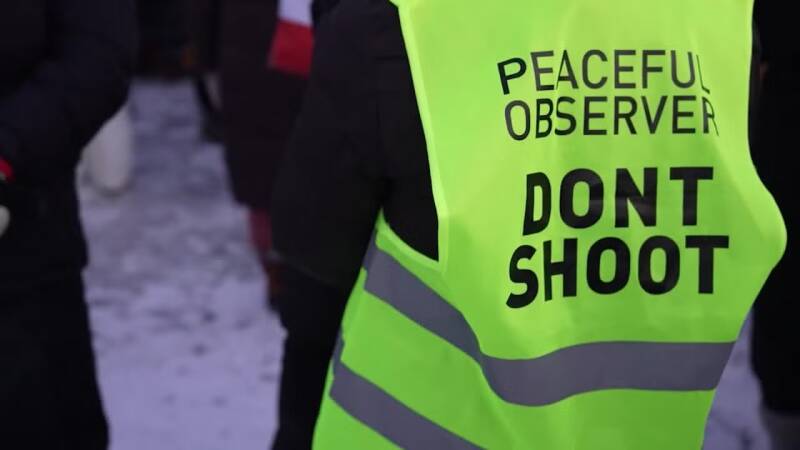
There was a time when the average American could go years without thinking about constitutional rights beyond a vague memory of Schoolhouse Rock and a half‑remembered civics class. That era is dead. It didn’t die quietly, either; it was dragged into the street and shot by a political culture that treats civil liberties like optional accessories and law enforcement powers like a buffet. The rise of constitutional‑observer culture didn’t come from think tanks or law schools or polite nonprofit panels. It came from people watching their government behave like it had something to hide. It came from communities who got tired of being told to “stay calm” while federal agents in unmarked vans snatched people off sidewalks. It came from parents who watched school boards get militarized, from immigrants who watched ICE treat due process like a suggestion, from activists who watched police departments stockpile military gear like they were prepping for a sequel to Fallujah. And it came from organizers like Ezra Levin who realized that if the government insists on acting like a dystopian regime, then the public damn well needs to know how to monitor it.
Constitutional‑observer culture is what happens when a country’s institutions stop earning trust and start demanding it. It’s the natural immune response to a political system that keeps testing how much authoritarianism it can slip past a distracted public. People didn’t wake up one morning and decide to learn the finer points of Fourth Amendment jurisprudence for fun; they learned it because they watched officers conduct searches without warrants, watched agencies operate without oversight, watched elected officials shrug at abuses, and watched courts move at a glacial pace while rights were violated in real time. The culture grew because people realized that “someone should do something” was not a plan. They became the someone.
The shift didn’t happen in a vacuum. It happened in living rooms, church basements, community centers, and Zoom rooms where thousands of people logged into webinars designed to teach them exactly what the Constitution says, what it doesn’t say, and how to tell the difference between lawful authority and government cosplay. These weren’t academic seminars; they were survival briefings. They taught people how to record law enforcement interactions without escalating danger, how to identify unconstitutional stops, how to document ICE raids, how to intervene safely when someone’s rights were being violated, and how to turn a single incident into a chain of accountability that bureaucrats couldn’t bury. The government hates this kind of literacy because it turns the public from passive subjects into informed witnesses. And informed witnesses are dangerous — not because they’re violent, but because they’re accurate.
The rise of constitutional observers is a direct indictment of the political conditions that made them necessary. When one major political party realized that norms are only binding if you care about shame, and the other major party kept insisting “the institutions will hold” long after the institutions were visibly melting, the public stepped into the vacuum. When the media treated authoritarian behavior like a ratings opportunity instead of a five‑alarm fire, the public learned to document their own reality. When federal agencies expanded their powers behind closed doors, the public learned to open their own eyes. And when elected officials treated civil liberties like bargaining chips, the public learned the rules well enough to call bullshit in real time.
Constitutional‑observer culture is not a hobby. It’s not a trend. It’s not a quirky subculture like people who collect vintage typewriters or raise backyard chickens. It’s a survival mechanism in a country where the government keeps daring people to notice what it’s doing. It’s the quiet, relentless, unglamorous work of watching the watchers. It’s the belief that rights don’t defend themselves and that institutions don’t magically enforce their own limits. It’s the understanding that democracy is not protected by the people in power but by the people who know how to hold power accountable.
What makes this culture powerful is that it’s decentralized. There’s no single leader, no central command, no official membership card. It spreads through trainings, through community networks, through people texting each other “record everything,” through organizers who hand out Know Your Rights cards like they’re Halloween candy, through neighbors who show up when ICE vans roll into town, through activists who livestream police encounters so the footage can’t disappear. It spreads because once you learn how to see constitutional violations, you can’t unsee them. And once you can’t unsee them, you can’t go back to pretending everything is fine.
The government would prefer a public that stays confused, intimidated, and deferential. Constitutional‑observer culture produces the opposite: a public that is informed, assertive, and unafraid to say, “Actually, that’s illegal.” It produces people who know the difference between lawful authority and abuse of power. It produces communities that refuse to be gaslit by official statements that contradict what they saw with their own eyes. It produces a citizenry that understands that democracy is not a spectator sport and that rights are only real if people know how to use them.
The rise of constitutional observers is one of the most important political developments of the last decade, not because it’s flashy but because it’s durable. It’s not built on outrage; it’s built on competence. It’s not built on vibes; it’s built on literacy. It’s not built on trust; it’s built on verification. And in a country where the people in charge keep trying to see what they can get away with, constitutional‑observer culture is the quiet, stubborn, unyielding force that keeps saying, “Not on our watch.”
Add comment
Comments