

They didn’t retreat. That’s the thing you need to understand about what happened after December 2020, after the draft executive order for federal seizure of election systems got circulated and the walls didn’t come down and nobody went to prison and the news cycle moved on. The thing about a radical idea is that it doesn’t die when people object to it. It goes to the gym. It does reps. It comes back in a different shirt.
What followed wasn’t a retreat from the edge. It was a reconnaissance mission to map every inch of it.
The ecosystem that assembled around American elections in the 2024 cycle was something genuinely new in the history of this republic — not because the ambition was unprecedented (it wasn’t, quite) but because the infrastructure had never been so wide, so coordinated, and so lavishly funded. The Republican National Committee deployed what it called a “ground game” of lawyers and poll watchers, and when they said 100,000 attorneys and volunteers, they weren’t speaking metaphorically. They were speaking operationally. CPAC circulated letters to county election offices about ballot drop-box monitoring. Adrian Fontes, the Arizona Secretary of State, looked at those letters and called them what they were: an “absurd sham.” He wasn’t wrong. The letters weren’t really about ballot security. They were about the theatrical performance of ballot insecurity — about keeping the alibi warm.
Billionaires materialized with PACs. County officials who had spent careers in relative obscurity suddenly found themselves at the center of national political strategy. State election boards, bodies that had existed for decades as administrative backwaters, became contested terrain. The Center for Media and Democracy did the painstaking work of counting: 239 election-denier officials in swing-state positions. Not fringe actors. Officials. People with gavels and authority and the ability, at the right moment, to simply not certify.
If you want to understand what stress-testing a democracy looks like from the inside, look at Georgia. The State Election Board, in the weeks before the November 2024 election, passed a series of last-minute rule changes that voting-rights organizations immediately challenged in court. Some were blocked. Some weren’t. The point wasn’t necessarily to survive every legal challenge. The point was to demonstrate that the machinery could be touched — that the men and women controlling it could reach in and adjust the gears and force everyone else to scramble. In Arizona, State Representative Ron Gould filed a lawsuit demanding hand counts of ballots, a process that would have been administratively catastrophic in counties processing hundreds of thousands of votes. In Michigan, a township clerk held vote tallies past the statutory deadline, a small act of defiance that, in isolation, looks like bureaucratic incompetence. In pattern, it looks like practice.
Meanwhile, the human beings working the machinery were getting messages that went well beyond professional discourtesy. The Princeton Bridging Divides Initiative documented more than 170 incidents targeting election officials. The Brennan Center counted 227 bomb threats against election offices. Maricopa County alone logged 12 threat incidents in October and November. And election officials — people who had come to this work out of a genuine commitment to the nuts-and-bolts mechanics of democracy — started leaving. The turnover rate climbed. The institutional memory walked out the door in sensible shoes, replaced, where it was replaced at all, by people whose relationship to election administration was, let’s say, ideological.
This is how you hollow out a system. Not with one dramatic blow. With a thousand small ones, each of which can be dismissed in isolation, none of which can be dismissed in aggregate.
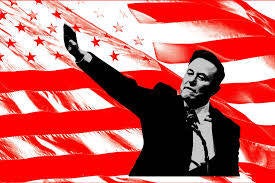
Then there was Elon Musk, who spent $250 million through America PAC on the 2024 election and who, if you gave him a lie-detector test and asked whether he understood irony, would probably short-circuit the machine.
The $1 million per day sweepstakes is where to start, because it has the quality of a fever dream described by someone who has read too much Gilded Age history. America PAC offered registered voters in swing states the chance to win $1 million a day, in exchange for signing a petition. Philadelphia District Attorney Larry Krasner filed suit immediately, calling it what it was: an illegal lottery. The Department of Justice sent warnings about voter inducements. None of this stopped the program. Over a million people signed up. Nine million dollars was distributed. The winners, it turned out, had been pre-vetted for “aligned values,” which is a phrase that means what you think it means and which Krasner, with the precision of someone who has spent a career watching powerful people launder corruption through paperwork, called “political marketing masquerading as a lottery.”
But the sweepstakes, lurid as it was, wasn’t the most structurally significant thing America PAC did. That distinction belongs to Georgia, where voters began receiving pre-filled absentee ballot applications — name, address, party affiliation, all of it already entered — traced back to America PAC. Under Georgia Code Section 21-2-381, pre-filling absentee ballot applications is prohibited. The applications were also missing the statutory disclaimers required by law. On February 18, 2026, the Georgia State Election Board issued a formal reprimand. Board member Janice Johnston stated for the record that the violations were real, documented, and significant.
A reprimand. Not a fine. Not a referral for prosecution. Not a consequence that would cause a man with a $250 million election budget to pause between bites of his lunch. A reprimand.
Here is the part that deserves its own paragraph, its own moment of silence, its own thirty seconds of you setting down whatever you’re drinking and staring at the middle distance: Elon Musk, who spent years amplifying claims that mail-in voting was a vector for fraud, who platformed every breathless theory about absentee ballot manipulation, whose entire electoral messaging rested on the premise that Democrats were corrupting elections through loose ballot procedures — that man’s PAC violated absentee ballot law. In Georgia. And received a reprimand.
The gap between the accusation and the actor has never been more precisely measured.
The pattern underneath all of this is the pattern that makes Episode 6 the ugliest episode to write, because it is not about dramatic villainy. It’s about the compounding logic of minimal consequences.
After the 2020 election, officials who participated in fake elector schemes, who pressured secretaries of state, who circulated draft executive orders for seizing voting machines — the vast majority faced no criminal accountability. The investigations were real. The indictments, where they came, were real. The trials, where they happened, were real. But the prosecution rate was not commensurate with the scale of what was attempted, and everyone watching the game could do the math.
After the 2022 midterms, county officials who refused to certify results were compelled to do so by courts. Compelled. But not prosecuted for the refusal. Not removed from office. Not rendered incapable of doing it again. They were corrected, the way you correct a child who has grabbed a toy that doesn’t belong to them — you take the toy back, but you don’t address the grabbing.
Fox News settled the Dominion Voting Systems defamation suit for $787 million. That is, in the history of American media, a genuinely significant accountability moment. It is also the exception so glaring it illuminates the rule. One settlement, against one network, for one specific category of harm, in a civil proceeding. The rest of the ecosystem — the podcasters, the county clerks, the state board members, the PAC operatives — operated in conditions of remarkable impunity.
What you get, when accountability is rare and selective, is normalization. Violations that would have ended careers in 2010 became, by 2024, baseline. The Overton window doesn’t just shift. It gets picked up, carried across the room, and set down somewhere unrecognizable.
The oversight mechanisms were not absent. Let’s be precise about this, because precision matters when the stakes are this high. State election boards existed and, sometimes, functioned. District attorneys investigated. Secretaries of State — some of them, the ones who hadn’t been replaced by election deniers — pushed back. Voting-rights organizations litigated with ferocity and won more often than the headlines suggested. The FBI Election Threats Task Force was real. The Electoral Count Reform Act, passed in 2022 with genuine bipartisan support, closed loopholes in the certification process that January 6th had exposed.
These were not nothing. Please don’t let anyone tell you they were nothing.
But oversight requires resources, and resources are political decisions. Oversight requires political will, and political will is contingent on who holds power. Oversight requires institutions that remain structurally independent of the people they are supposed to oversee. And when the people who were supposed to be overseen started getting appointed to run the agencies doing the overseeing, the word “guardrail” started to feel like nostalgia.
On January 28, 2026, FBI agents arrived at the Fulton County Elections Hub.
They brought trucks. They left with approximately 700 boxes — ballots, ballot images, tapes, poll books, chain-of-custody records, some of it under judicial seal. Robb Pitts, the Fulton County Commission Chairman, stood in front of cameras and said what he believed was true: that this was “intimidation and distraction.” He was not speaking abstractly. He was describing something he had watched happen to his county’s election infrastructure.
Kash Patel confirmed that a judge had found probable cause. DNI Tulsi Gabbard was present at the scene. Tulsi Gabbard, whose portfolio does not include domestic law enforcement, whose authority does not extend to county elections offices, who was there — what? To observe? To signal? To make sure everyone understood the full weight of the federal apparatus that had arrived to take the boxes?
Rick Hasen, one of the most careful election law scholars in the country, offered an analysis that cut through the fog: the target wasn’t 2020. The target was 2026. The machinery of federal investigation, aimed at a Democratic county’s election records, in the second year of a second term, with midterms on the horizon. The agencies that were designed as guardrails were now inside the fence.
This is a thing that happens in history. It happens in the history of every country that has traveled this road before us. The moment when the institution meant to check the powerful becomes the instrument of the powerful is not always a dramatic rupture. Sometimes it is a Tuesday morning in January, with trucks backing up to a loading dock and 700 boxes going into federal custody, and people on the street trying to figure out what they just watched.
There was a poll worker in Georgia who opened their mail and found a pre-filled absentee ballot application with their information already entered. Name. Address. Party. All of it. From a PAC. In violation of state law. What did that poll worker feel, holding that piece of paper? Not fear, necessarily. Something adjacent to fear. The sense that the walls of the process they had dedicated themselves to were slightly more permeable than they had believed.
There was a Fulton County elections staffer who watched ballots being loaded into trucks by federal agents. The ballots they had processed. The ballots that represented votes cast by citizens who trusted the system enough to participate in it. Now in boxes. Now in trucks. Now somewhere else. The staffer knew, as every elections professional knows, that chain of custody is not a bureaucratic nicety. It is the thing that makes verification possible. It is the foundation of the foundation.
There was an Arizona county clerk whose home address was posted online after they refused to participate in a hand-count scheme. Who came home after that and looked at their front door differently.
And there was Sherri Allen — election professional, someone who had spent her career doing the invisible, essential work of making democracy function — who looked at what was happening around her and said the thing that is the most honest summary of this entire episode: “It’s out of our hands.”
That sentence lands like a stone dropped into still water. Listen to it. Not “we’re fighting back.” Not “the courts will handle it.” Out of our hands. Spoken not in despair, exactly, but in a kind of terrible lucidity. The recognition that trust, once it begins to erode, does not erode in dramatic collapses. It erodes in cuts. In pre-filled forms. In seized boxes. In threats that go unprosecuted. In rules changed at the last minute. In 100,000 lawyers deployed to watch. In sweepstakes that aren’t sweepstakes. In reprimands that aren’t consequences.
Each cut is small. The bleeding is cumulative.
Here is where we are as we close Episode 6 and face what’s coming next.
The institutions bent. They did not break — not yet — but the stress test revealed the weak points with the clinical precision of a structural engineer’s report. The actors who ran the stress test remain in place. Some of them are now running the agencies that used to watch them. The 700 boxes sit in federal custody, their chain of custody disrupted, their evidentiary integrity contested, their presence in federal hands serving a purpose that has nothing to do with election integrity and everything to do with election leverage.
The draft executive order from December 2020 was not the plan. It was the first draft of the plan. Everything since has been revision, refinement, practice. The system was poked to see where it gave. It gave in Georgia, in Arizona, in Michigan, in Fulton County on a Tuesday in January. The weak points are mapped now. The playbook exists. The people needed to execute it have been positioned.
This is not the end of the story. This is the middle of it — the part where the villain has assembled the pieces and the audience is leaning forward and hoping, with everything they have, that someone is about to walk through a door.
Episode 7 is about what happens when the door doesn’t open. And what we do about it.
Add comment
Comments