

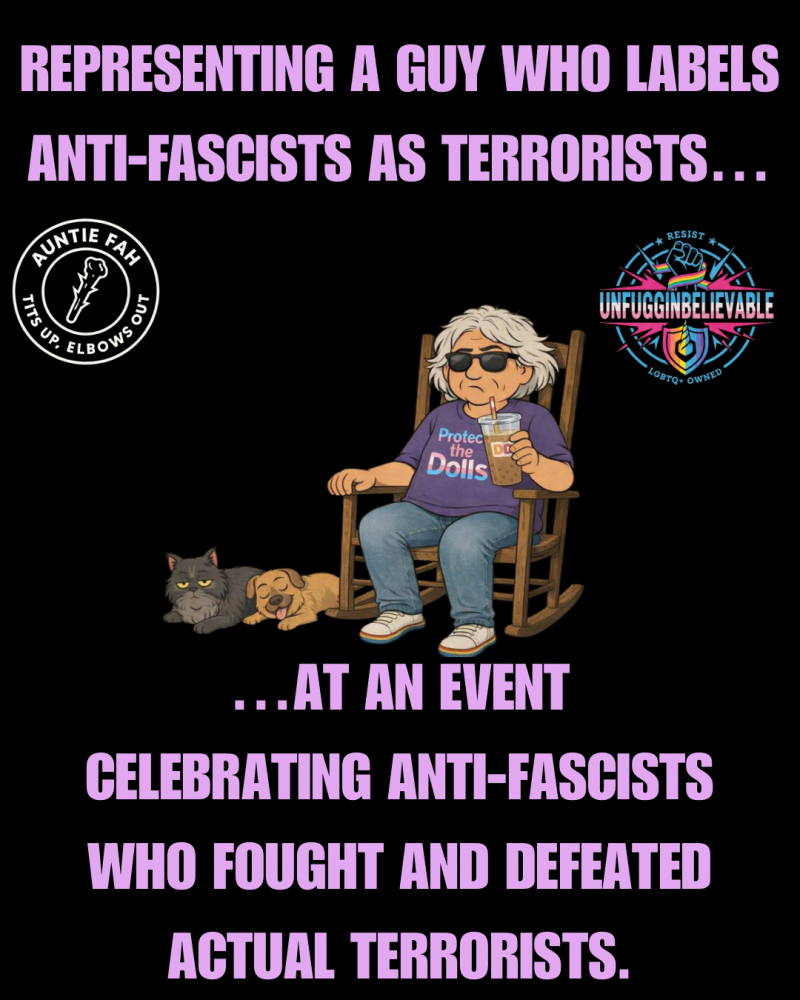
Auntie had barely settled into her chair — coffee steaming, jaw already tightening — when the footage rolled of Defense Secretary Pete Kegsbreath stepping up to the mic at the D‑Day ceremony, and baby, the way my soul left my body. Because there are moments in history when the only appropriate posture is reverence, when the air itself demands quiet, when the ghosts of Normandy stand taller than any living politician, and this was one of those moments. Yet there he was, according to critics and commentators, treating the anniversary of D‑Day like it was his personal audition tape for a culture‑war talk show, launching into commentary about European immigration policy as if the beaches of Normandy were the right venue for a geopolitical scolding. Observers have said it felt like watching someone bring a bullhorn to a funeral. And I, your Auntie Fah, felt every cell in my body try to file for divorce from the moment.
Because let’s be clear: you can debate immigration policy until the sun burns out — that’s politics, that’s democracy, that’s the messy human project. But D‑Day is not politics. D‑Day is sacred ground. D‑Day is where teenagers died to stop fascism from swallowing the world whole. D‑Day is where you bow your head, not wag your finger. And yet, as analysts have noted, Petey’s remarks drifted into framing European immigration as a kind of civilizational unraveling, a narrative that some experts say oversimplifies complex demographic realities but sure does light up certain corners of the media ecosystem. And the timing — my God, the timing — made it feel like he was still speaking in the cadence of a weekend panel show rather than representing the United States at one of the most solemn commemorations on Earth.
And it didn’t stop there. People who’ve been following his recent public statements have pointed out that he’s been leaning heavily into rhetoric about “global elites,” even while standing in a role that is, by definition, elite. They’ve noted that he often uses language that compresses complicated geopolitical issues into punchy slogans that play well on television but don’t reflect the nuance of actual policy. And they’ve said that this pattern — this habit of bringing culture‑war framing into contexts where it doesn’t belong — has been showing up in diplomatic events, military ceremonies, and international gatherings where the expectation is unity, not division; solemnity, not spectacle.
So there I was, watching him speak on the beaches where boys from New Hampshire, from Iowa, from Harlem, from the Navajo Nation, from everywhere, died so that fascism would not win — and instead of hearing a tribute to their courage, their sacrifice, their impossible bravery, I was hearing commentary jarringly out of place. And I felt that familiar heat rise in my chest, that Auntie fire, that voice that wants to grab the mic and say: Sir, with all (un)due respect, this is not the moment for your talking points. This is not the moment for your grievances. This is not the moment for anything but humility. The room is Normandy. The occasion is D‑Day. The assignment is reverence.
And so, from the bottom of my caffeinated, exasperated heart, I say this: let the ghosts speak. Let the silence speak. Let the memory of what happened there speak. And let anyone who steps onto that sand remember that the world is bigger than their rhetoric, bigger than their narratives, bigger than whatever they think will play well on cable. Because on that beach, on that day, the only thing that matters is honor.
Add comment
Comments